‘Take a number of shots using lines to create a sense of depth. Shooting with a wide – angle lens (zooming out) strengthens a diagonal line by giving it more length within the frame.
The effect is dramatically accentuated if you choose a viewpoint close to the line.’
Below are some photographs for this exercise that I took today in London.
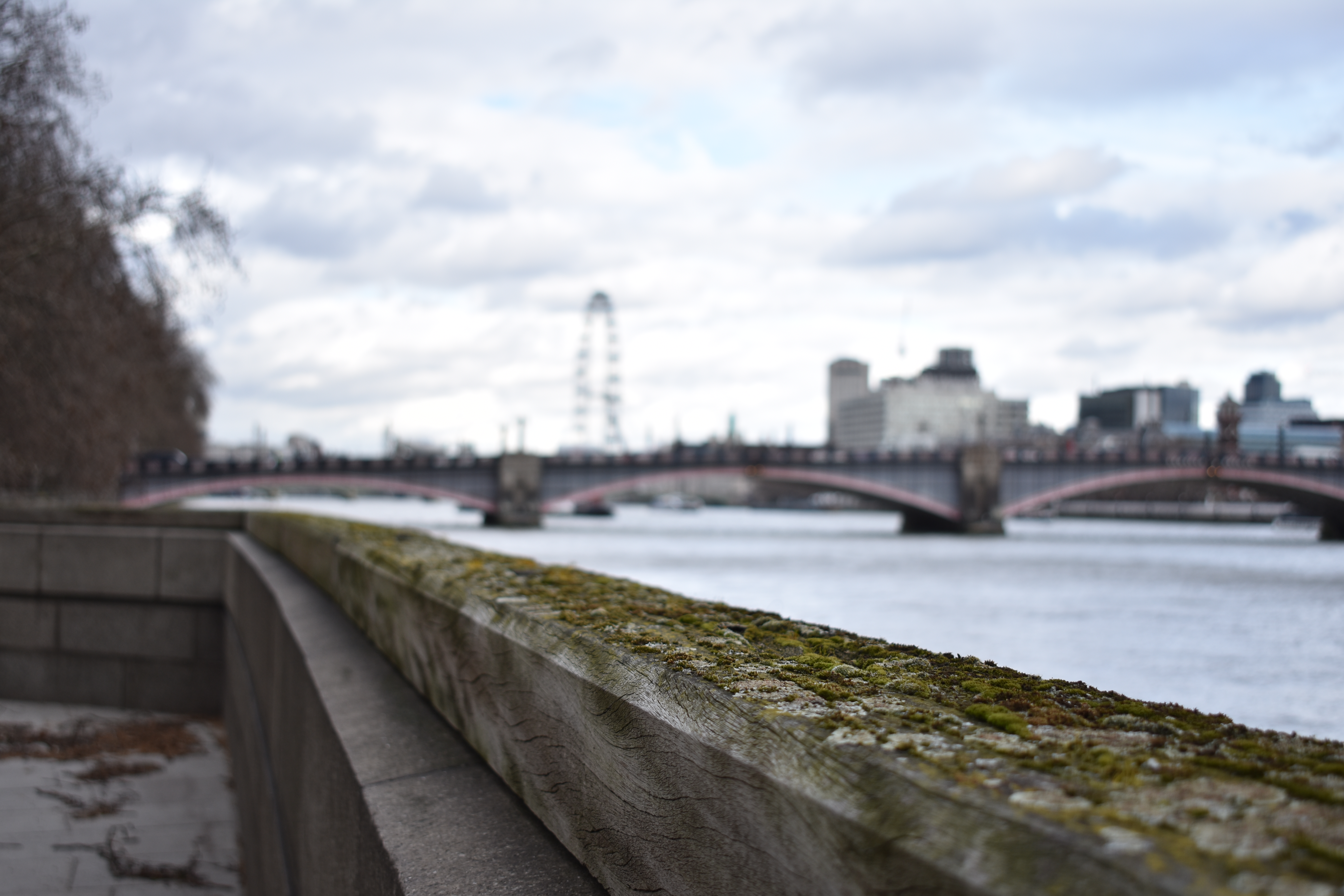
I love how by being in focus in the foreground only, it’s easy to follow the ledge around the frame and out to the left hand side where it leaves the photograph. You could say the lines comes back in again, in the middle of the frame, where the bridge cuts across the photo and back out to the right.
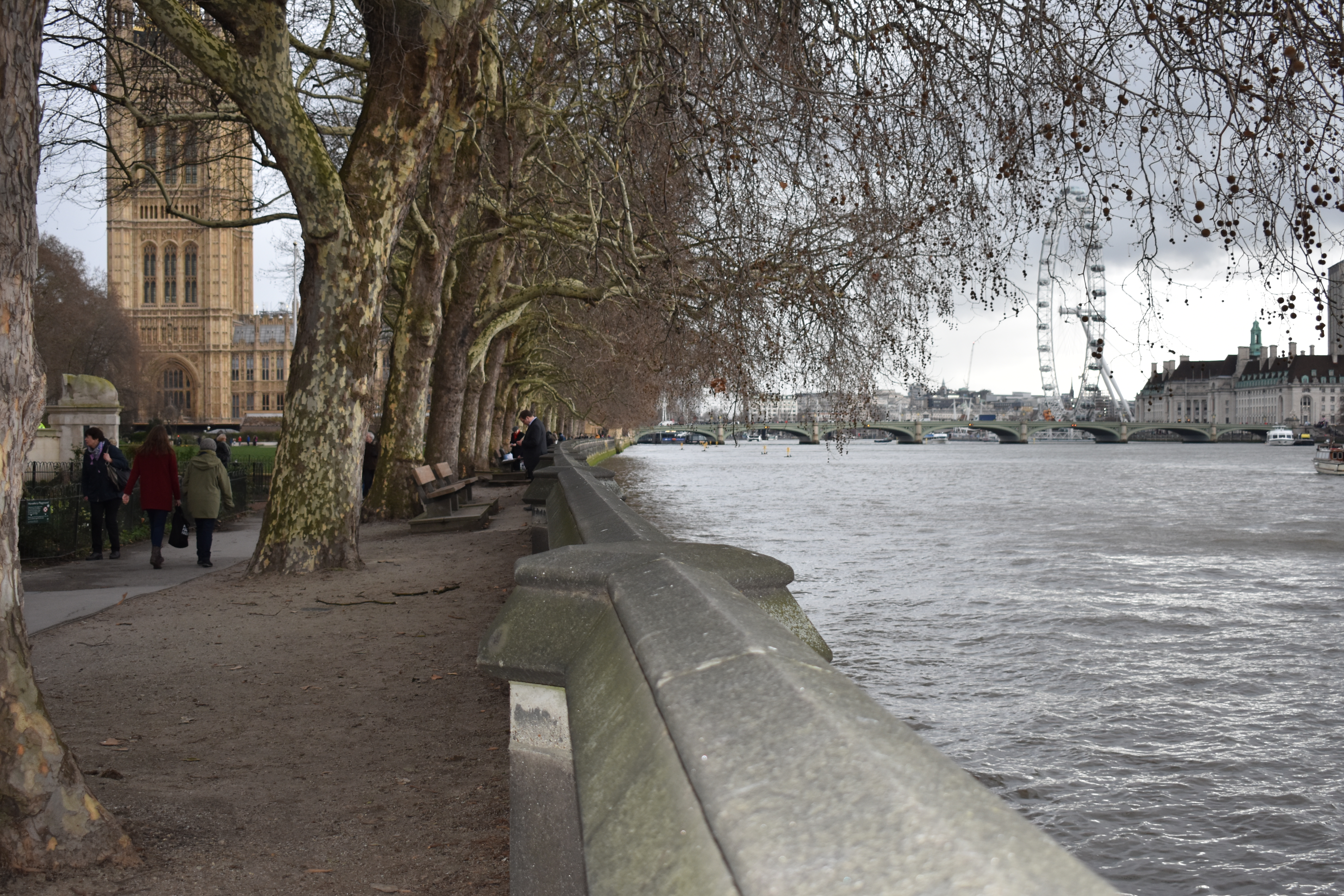
Another long leading line along the edge of the River Thames, this time disappearing off into the distance.
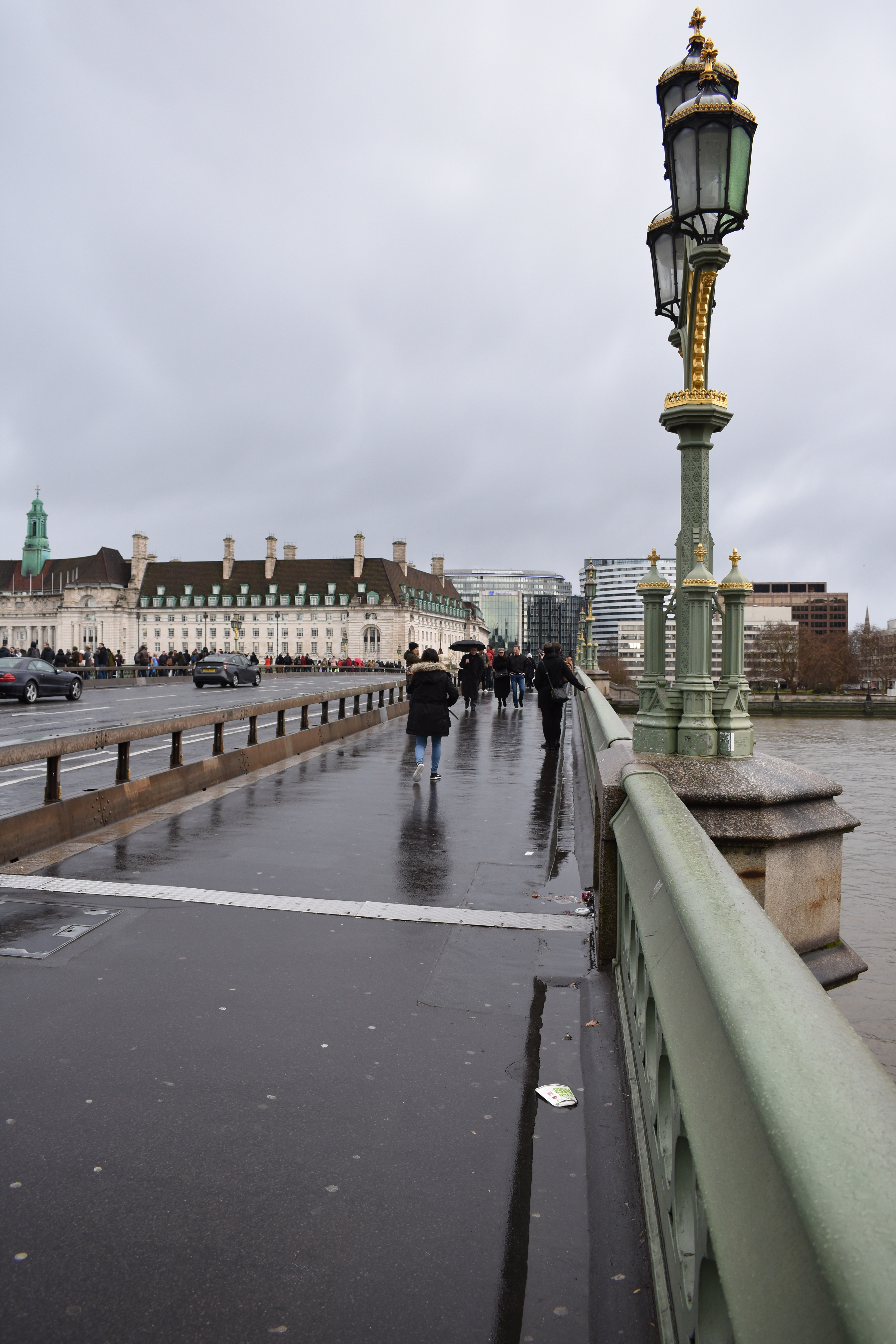
Again by having the foreground in focus, the eye is drawn away into the distance. It’s drawn there again by the road side railings that start in the middle of the photograph and go off to a similar distal point.
‘Now take a number of shots using lines to flatten the pictorial space. To avoid the effects of perspective, the sensor/film plane should be parallel to the subject and you may like to try a high viewpoint (i.e. looking down). Modern architecture offers strong lines and dynamic diagonals, and zooming in can help to create simpler, more abstract compositions’
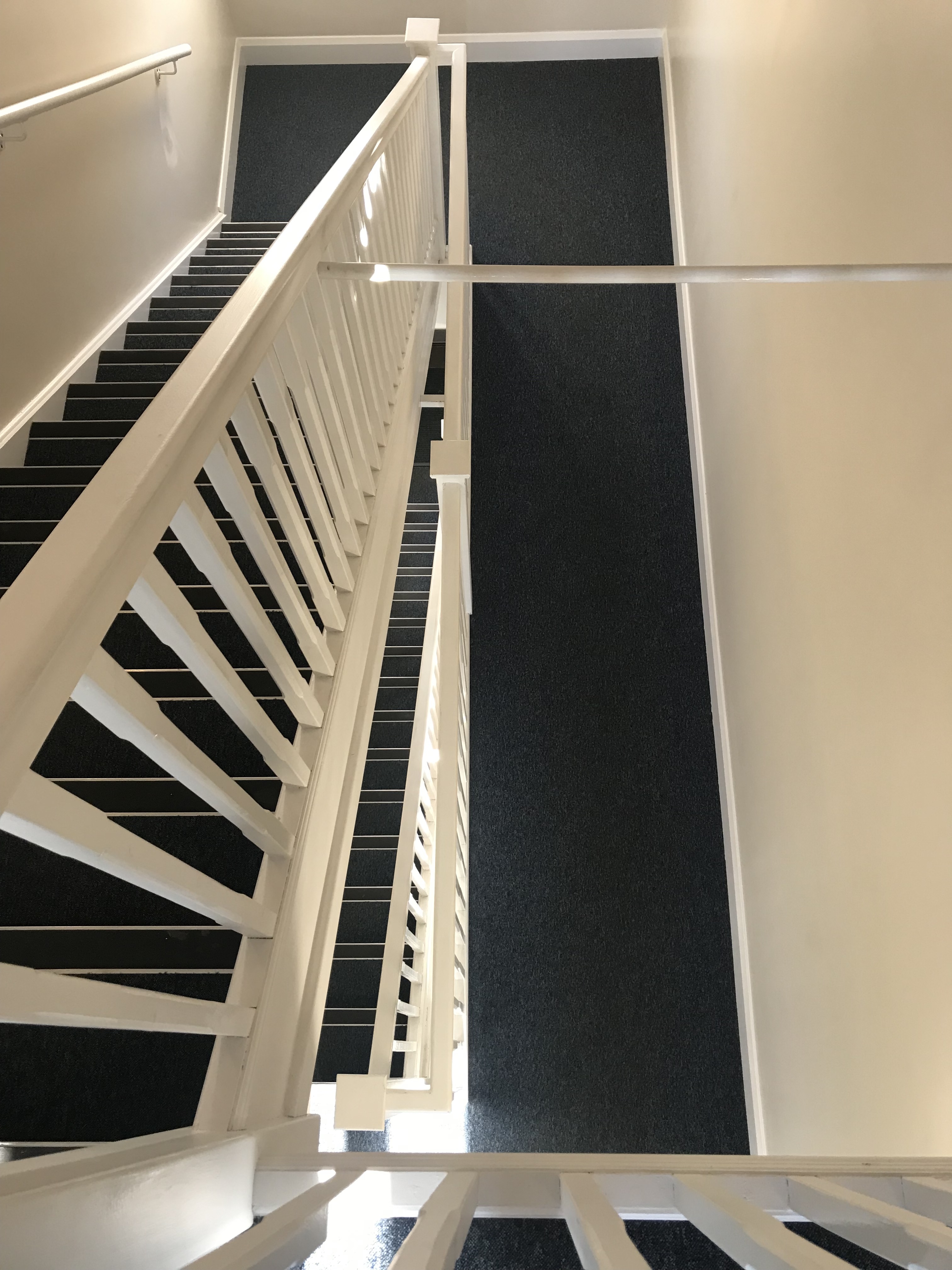
I’ve attempted to take this image from above, trying to flatten the leading lines, although I’m not sure how well this one works, as from some angles it still looks similar to the leading lines from the above part of the exercise, although the eye doesn’t follow them out of the picture like in my examples along the river.
 Alana Smith